
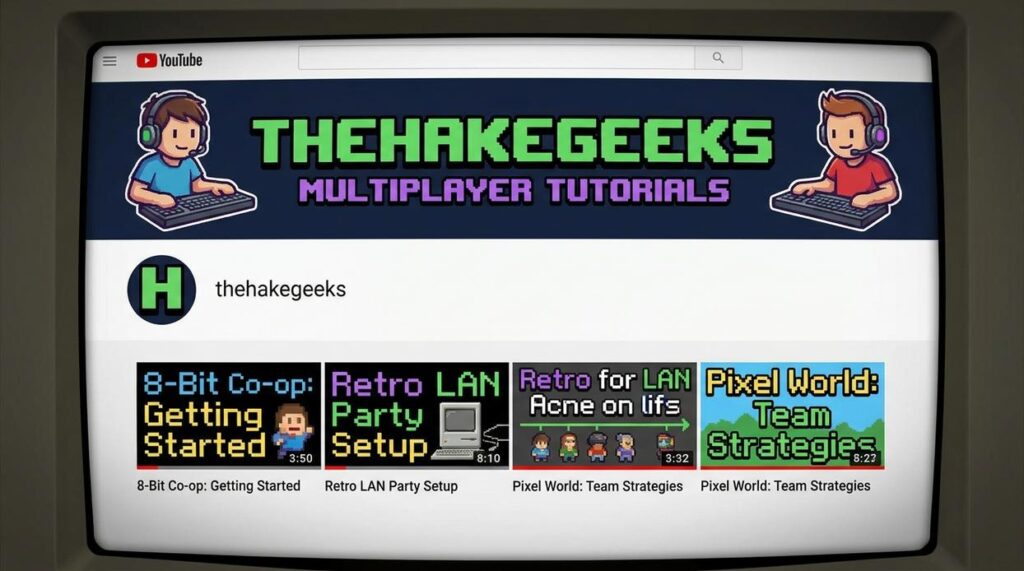
I’ve spent years watching players grind the same ranked matches over and over, wondering why they’re not climbing.
You’re probably here because you’re tired of recycling the same generic advice that doesn’t actually move the needle. I get it. Another “just aim better” tip isn’t going to cut it.
Here’s what I know: TheHakeGeeks’ multiplayer tutorials teach something different. Not quick fixes. A real system.
I went through hundreds of hours of TheHakeGeeks’ multiplayer tutorials and pulled out the core strategies that actually separate elite players from everyone else.
This article breaks down those principles. Not just what to do, but why it works and how to apply it to your game right now.
We’re not talking about random tips you’ve seen a dozen times. This is the framework that top players use, distilled into something you can actually implement.
You’ll learn the fundamental strategies that define competitive play. The ones that work across different games and situations.
No fluff. No guessing. Just the proven approach from TheHakeGeeks’ multiplayer tutorials that helps you understand what you’re doing wrong and how to fix it.
TheHakeGeeks’ Core Philosophy: The ‘Information Advantage’ Framework
Most players think getting better means improving their aim.
They spend hours in aim trainers. They tweak their sensitivity. They practice flick shots until their wrist hurts.
But here’s what I’ve learned from watching thousands of matches.
Aim only gets you so far.
The best players I know don’t have the best aim. They have the best information. They know what’s coming before it happens.
That’s the whole point of thehakegeeks multiplayer tutorials. We focus on what actually wins games.
Let me break down how this works.
Map Control
This isn’t about standing on a point or holding a room. That’s what beginners think map control means.
Real map control is about sightlines. It’s about knowing where enemies can see you from and where you can see them.
When you control the right angles, you dictate how fights happen. You force opponents into bad positions without firing a shot.
Resource Economy
Every ability you use is a trade. Every reload is a window of vulnerability (even if it’s just half a second).
The players who win consistently? They manage these resources better. They don’t waste utility on low-percentage plays. They track enemy cooldowns and strike when opponents are weak.
Psychological Pressure
This is where it gets interesting.
You can make enemies panic without touching them. Push aggressively for thirty seconds, then back off. They’ll expect another push. When it doesn’t come, they second-guess everything.
That hesitation kills them more than your bullets do.
Tutorial Breakdown #1: Mastering Positional Awareness and Rotations
Most players stare at the center of their screen and wonder why they keep getting flanked.
I used to do the same thing until I watched thehakegeeks multiplayer tutorials from thehake. The approach flips everything you think you know about competitive play.
The Mini-Map Is Your Primary Screen
Here’s what changed for me.
I started glancing at the mini-map every three seconds. Not when I remembered. Every three seconds like clockwork.
Your eyes should move: mini-map, center screen, mini-map. That rhythm tells you where enemies are rotating before they appear on your screen. You’ll spot gaps in their formation and know when you’re about to get third-partied.
The data is already there. You just need to look at it.
Move Before the Fight Ends
Now here’s where it gets interesting.
Most players wait until a fight is completely over before rotating to the next objective. By then, the enemy team is already set up and waiting for you.
The better play? Start moving when you know you’ve won. Not after. When you see their last player is weak and your team has the advantage, one person should already be heading to the next zone.
You’ll beat the other teams there almost every time.
Taking High Ground Actually Matters
People talk about high ground like it’s some abstract concept. It’s not.
If you’re on the high ground, you control sightlines and force enemies to expose themselves when pushing up. If they have it, you’re fighting uphill both literally and figuratively.
The trick is knowing when to contest it and when to rotate around it. Fighting for high ground when the zone is about to close? That’s how you get caught in the open.
Use audio cues to track enemy footsteps above you. Different surfaces make different sounds, and that tells you exactly where they’re holding position.
Want more competitive gaming breakdowns? Check out the top gaming headlines you missed this week.
Tutorial Breakdown #2: The Art of Effective Team Communication
You’ve been there.
Your team loses a winnable fight because someone screamed “He’s over there!” and nobody knew who or where.
Good communication wins games. Bad communication? That’s how you watch your rank drop.
The Three C’s That Actually Work
TheHakeGeeks breaks it down into what they call the Three C’s: Clear, Concise, and Calm.
Not rocket science. But most players still get it wrong.
Clear means your teammates know exactly what you’re talking about. Concise means you’re not writing a novel mid-fight. Calm means you’re not tilting your whole squad because you got picked.
Here’s what bad callouts sound like: “He’s over there!” or “They’re pushing!” or my personal favourite, “HELP!”
Now compare that to this: “Tracer, one-shot, back-right pillar.”
See the difference? Your team knows the hero, the health status, and the exact location. They can act on that.
Ultimate Economy Changes Everything
I learned this from thehakegeeks multiplayer tutorials. Coordinating abilities isn’t just about pressing Q at the same time.
It’s about knowing when to hold your ultimate and when to stack them for maximum impact. A Zarya grav paired with a Hanzo dragon wins fights. A Zarya grav with nothing to follow up? You just wasted 90 seconds of charge.
Talk to your team before the fight starts. Know who’s got what ready.
When Words Aren’t Enough
Sometimes you can’t talk. Maybe your mic died or you’re in a loud room.
The ping system exists for a reason. Use it. A danger ping on a flanker tells your supports to watch their back without you saying a word.
Master both verbal and non-verbal communication. You’ll win more fights and your teammates will actually want to group up with you again.
Putting It Into Practice: A 3-Game Training Regimen
You’ve got the theory down. Now let’s talk about what actually works.
I recommend running three focused games back to back. Each one targets a specific skill that’ll make you better at multiplayer.
Game 1: Information Gathering
Mute your mic for this one.
I know that sounds weird but stick with me. You need to focus entirely on your mini-map and audio cues. Watch where enemies appear. Listen for footsteps and gunfire. Notice the patterns.
You’ll be surprised how much you miss when you’re talking.
Game 2: Positional Play
This game is all about controlling space. Find the high ground or power positions on the map and hold them. Don’t worry about your K/D ratio. Just focus on being in the right spot at the right time.
Check out thehakegeeks multiplayer tutorials from thehake if you need help identifying strong positions on different maps.
Game 3: Active Communication
Now you can unmute.
Make clear callouts for everything you see and do. Enemy locations. Your movements. When you’re reloading. Keep it short and useful.
After these three games, you’ll notice something. Your awareness goes up. Your positioning gets smarter. Your team actually knows what’s happening.
Run this regimen once a week and watch how fast you improve.
Your Path to Competitive Dominance
You now have the foundation you need.
TheHakeGeeks’ multiplayer tutorials from TheHake give you a structured approach to improving your game. No more guessing why you lost or what went wrong.
Random matchmaking doesn’t have to feel like a coin flip. When you focus on information and communication, you build skills that work in any competitive game you play.
These aren’t just tips for one title. They’re habits that make you better across the board.
Here’s what I want you to do: Pick one strategy from this guide. Just one. Apply it consciously in your very next match.
That’s how you start building better habits. Not by trying to change everything at once, but by focusing on one thing and doing it right.
Your next game is waiting. Make it count.


