
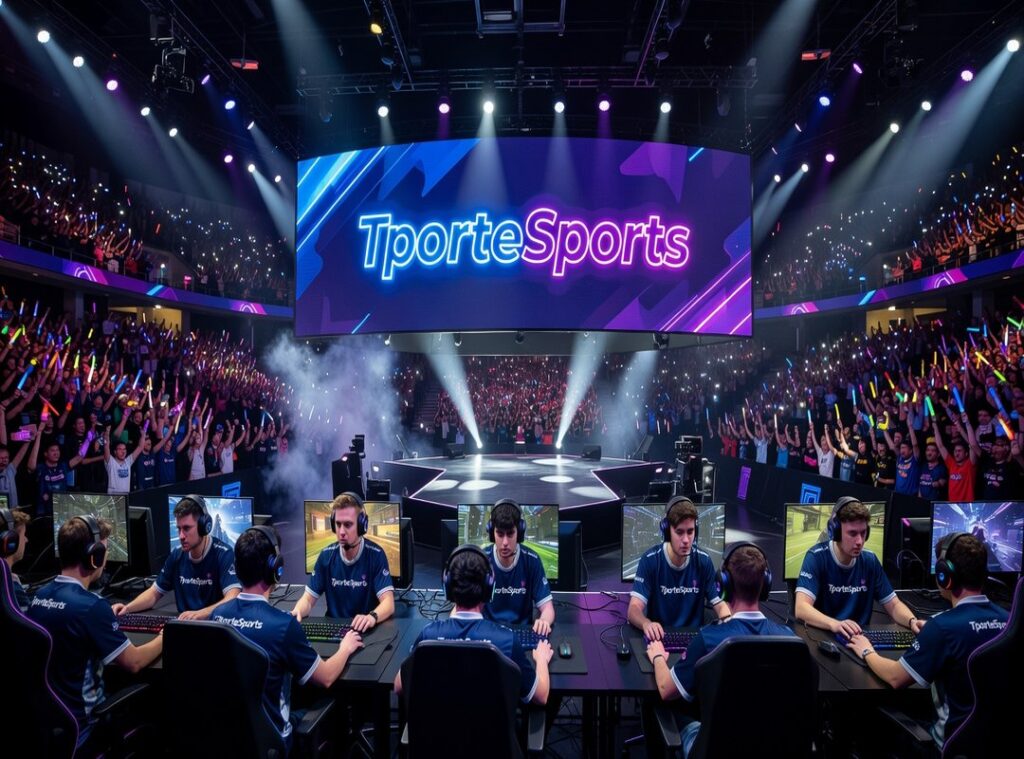
You’re standing in the arena.
The crowd screams. Lights flash. Two players stare at each other across a stage (not) with fists raised, but with controllers tight and eyes locked.
Then you go home and try to figure out how to even enter something like that.
Where do you start? A local Discord tournament? A $500 qualifier?
A franchised league that already has your favorite team locked in?
It’s overwhelming. And it shouldn’t be.
This guide cuts through the noise around Tportesports.
I’ve watched qualifiers in basements and sat courtside at global finals. I’ve helped run events on PC, console, and mobile (from) unpaid grassroots scrims to six-figure third-party tournaments.
I know which platforms are legit. Which formats actually let new players rise. it leagues gatekeep and which ones open doors.
You don’t need another list of events.
You need to understand how Competitive gaming events fit together. And why structure changes everything for players, fans, and organizers.
By the end of this, you’ll know exactly where to plug in (and) whether it’s worth your time, money, or energy.
No fluff. No jargon. Just what works.
How Pro Tournaments Actually Work
I’ve watched tournaments fall apart because people assumed “official” meant “open.”
It’s not.
There are three real tiers. Grassroots events run by Discord mods and streamers. Mid-tier qualifiers backed by publishers (think) Riot or Valve giving a green light but not the budget.
Top-tier? That’s LEC, VCT Masters, The International. Big stages.
Big money. Big gatekeeping.
You think you can just sign up for those? Nope.
Entry paths vary wildly. Some require regional ranking points. Others are invite-only.
A few have quotas (like) only two teams from Southeast Asia no matter how good the third one is. (Yes, that’s unfair. Yes, it’s real.)
Formats matter too. Single elimination? Brutal but fast.
Double elimination? More forgiving. Round-robin?
Lets everyone play everyone. But drags on. Swiss?
Used at Worlds group stages (you) face teams with similar records. Hybrids mix them. TI starts with round-robin groups, then shifts to double-elimination playoffs.
Governance splits three ways: developer-run (Riot’s VALORANT Champions Tour), third-party operated (ESL Pro League), or hybrid (BLAST.tv partnering with publishers).
Each model changes who gets paid, who gets heard, and who gets cut.
Grassroots is where most players start. And where most burn out.
If you’re new, skip the top tier. Start small. Build rep.
Learn the rhythm.
Tportesports covers this space without pretending it’s fair.
Prize pools? Grassroots: $500. Mid-tier: $50k.
Top-tier: $2M+. Don’t chase the headline number.
Ask yourself: What do you need to win (skill,) connections, or just the right passport?
Who Can Actually Compete (And) Where to Start
I started in a Discord scrim. No team. No sponsor.
Just me, a headset, and a ranked loss streak I refused to quit.
You don’t need permission to compete. You need access. And the right path.
Minimum age? Riot events say 16+. Dota 2 Majors lock qualifiers by region.
That’s real. It’s not arbitrary. (It’s also why you check the rules before you rage-quit a bracket.)
Here’s how it actually works for most people:
Rank up → enter open qualifiers → survive long enough to hit closed qualifiers → earn your spot on the main stage.
No gatekeepers. Just match data.
Free entry points exist. FACEIT Open. Battlefy community tournaments.
Even Discord-hosted scrims with real brackets and replay reviews.
They’re not “practice.” They’re your résumé.
“You need a pro team to start” (false.) Solo queue counts in MOBA and RTS qualifiers. Always has.
“Only streamers get scouted”. Also false. Scouts watch VODs.
Not follower counts.
Rocket League. Street Fighter 6. Apex Legends.
All three run regular, low-entry tournaments with live results and real prize pools.
Start there. Not “someday.” Now.
Tportesports isn’t some mythical club. It’s the name on the registration page when you click “enter tournament.”
You show up. You play clean. You review your mistakes.
That’s the only credential that matters.
The rest is noise.
Real Events vs. Fake Tournaments: How I Tell

I check the rules first. Always. If there’s no public rulebook (with) prize splits, match formats, and disqualification terms.
I wrote more about this in Difference between gamer and player tportesports.
Walk away. No exceptions.
Vague contact info? Like an email that says “[email protected]” with no name or history? That’s a red flag.
I’ve emailed those addresses. Most bounce. Or reply with copy-pasted nonsense.
Mandatory registration fees without itemized costs? Huge warning. Legit events show where money goes.
Production, prizes, staff. Not just “$49.99 to compete.”
No listing on Liquipedia or Esports Charts? That’s not just inconvenient (it’s) suspicious. Those sites don’t add every tiny cup, but they do track anything with real structure and follow-through.
Fake ESL or DreamHack logos? I zoom in. Bad kerning.
Wrong font. Off-color gradients. Real orgs guard their branding like dragons guard gold.
Green flags matter more than red ones. Verified Twitter or Discord with archived VODs of past finals? Good sign.
Clear anti-cheat policy naming tools like Easy Anti-Cheat or Valve Anti-Cheat? Yes. Hardware sponsors or dev partnerships listed with dates?
Even better.
I use Liquipedia’s Tournament History tab (and) WHOIS lookup on the domain. If the site was registered last Tuesday? Hard pass.
A 2023 scam collected $12k. Canceled day before start. No refunds.
They could’ve spotted it: no rulebook, no past winners linked, domain registered 11 days prior.
Before paying or registering, ask:
Is there a public rulebook?
Are past winners named and linked?
Tportesports isn’t magic. It’s consistency. The Difference Between Gamer and Player Tportesports shows how real engagement separates noise from signal.
I ignore the flashy banners. I read the fine print.
Winning Isn’t Enough: Engagement Wins Fans
Prize pools lie. They look big on a banner. They don’t tell you if people stick around.
I watched the VCT Masters broadcast last year. Seventy-two percent watch time. People stayed.
Then I watched a low-budget regional qualifier. Thirty-eight percent. Half the chat went silent by map two.
That gap isn’t about skill. It’s about storytelling.
Fnatic vs. G2 at MSI 2023? I knew their histories.
I remembered the 2022 finals loss. I cared who won (not) just who clicked fastest.
Production quality backs that up. Multi-cam angles. Clean stat overlays.
Same casters week after week. Post-match interviews that feel human, not scripted.
Live polls. Interactive maps. Chat that actually moves the broadcast sometimes.
That’s not fluff. That’s dwell time. That’s what sponsors pay for.
Better engagement → better sponsors → bigger prize pools → stable infrastructure. It’s a loop. And it starts long before the first pick.
Tportesports gets this right more often than most. Skip the flashy intro. Build the story.
Keep it real.
You’re Ready to Play
I’ve seen how messy competitive gaming events get. Too many platforms. Too many rules.
Too much noise.
You don’t need more options.
You need one clear place to start.
That’s why we covered structure, access, legitimacy, and engagement. Not as theory, but as filters. Use them.
Cut through the clutter.
Tportesports gives you that. No gatekeeping. No guesswork.
Just real events, real rules, real entry points.
So pick one open qualifier in your region or game. Register. Even if you just watch.
Even if you’re nervous. Especially then.
Every pro player started at an event just like the one you’re about to join.
Go sign up now.
The next slot fills fast.