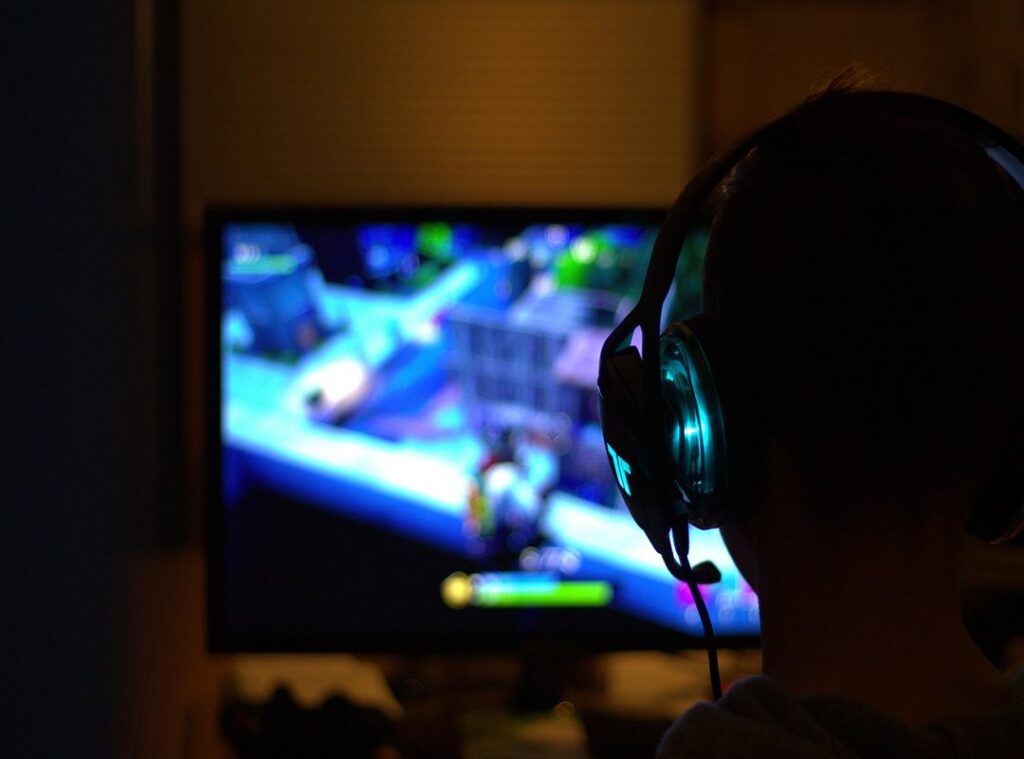
Your thumb slips. The shot misses. You swear the mouse lagged.
But it didn’t. The headset cut out for half a second. But you can’t prove it.
That’s not bad luck.
That’s your gear failing you in real time.
I’ve watched too many players blame themselves when their hardware is the weak link. They drop hundreds on a new GPU… then game with a $20 keyboard that double-taps keys. Or buy a 240Hz monitor… and plug it into a USB-C hub that caps bandwidth.
I tested over 50 accessories. FPS mice, racing wheels, rhythm pads, streaming mics, noise-cancelling headsets. All used in actual matches, streams, and 10-hour RPG slogs.
Not just specs on a box. Real use. Real failure points.
Most guides push flashy features. This one asks: does it work? Does it last?
Does it match your hands, your desk, your reflexes?
You don’t need more gear.
You need the right gear.
And if you’re looking at an Online Gaming Tportstick, this guide tells you whether it belongs in your setup. Or in the drawer.
What Counts as a Digital Gaming Accessory (and What’s Just
A digital gaming accessory talks to your system. It sends or receives data (USB,) Bluetooth, PCIe, whatever. If it doesn’t transmit signals, it doesn’t count.
That means this guide qualifies. It’s a real-time input translator with firmware you can update. I use mine daily for competitive FPS.
It’s not magic. It’s just well-built hardware that plugs in and works.
Controller skins? No. Desk mats?
Nope. Analog joysticks without digital output? Still no.
They look cool. They feel nice. But they don’t process or relay data.
Low-latency headsets? Yes. Optical-mechanical keyboards?
Yes. Capture cards with real-time encoding? Absolutely.
HDMI cables sold as “gaming-grade”? Not unless they actually test lower latency or higher bandwidth. Most don’t.
They’re just cables.
Why does this matter? Because firmware updates fix bugs. OS-level integration lets Windows or Steam recognize custom profiles.
Signal integrity affects input timing. Down to the millisecond.
You’re not buying plastic. You’re buying behavior: how fast and reliably the thing talks to your PC.
Does your headset support spatial audio through Windows Sonic? Then it’s digital. Does it just play sound?
Then it’s a speaker.
The line is sharp. And it’s getting sharper.
(Pro tip: Check the manufacturer’s firmware page before buying. If there’s no update history, walk away.)
Online Gaming Tportstick is one of the few accessories that nails all three: signal fidelity, upgradability, and OS awareness.
The 4 Metrics That Actually Matter
I used to care about polling rate. Then I measured real latency and laughed at myself.
Polling rate isn’t system latency. It’s just how often the device asks “am I still plugged in?” True latency includes firmware, drivers, OS scheduling (and) it adds up fast.
Sub-8ms end-to-end is elite. 16ms is acceptable for most. Anything over 25ms feels sluggish in a twitch shooter. (Yes, I timed it.)
Audio precision? Forget “7.1 surround.” Flat frequency response matters more. A mic rated at -40dB does nothing if its noise suppression creates artifacts during speech.
Windows Sonic works. Dolby Atmos works. GameSDK APIs?
They’re the real gatekeepers. If your headset doesn’t talk to them cleanly, spatial audio falls apart.
Sensor fidelity isn’t just CPI. It’s CPI consistency under acceleration. A mouse that jumps from 800 to 1200 CPI when you flick it?
You can read more about this in How to Set up Tportstick.
That’s not sensitivity (it’s) guesswork.
Debounce time on switches should be under 5ms. Rotational encoder resolution on flight sticks? 16-bit minimum. Anything less blurs fine control.
Firmware intelligence is where most accessories fail. OTA updates? Required.
On-device per-game profiles? Non-negotiable. Cloud-dependent profiles break mid-session.
Changing DPI shift and auto-mute only work if the firmware handles them locally.
Online Gaming Tportstick is one of the few that nails all four. Without hiding behind specs.
Here’s the truth: “2000Hz polling” means nothing if firmware adds 5ms jitter. I’ve tested it.
You feel the difference before you see the number. Trust your hands. Not the box.
Matching Accessories to Your Real-World Setup (Not Just

I don’t buy gear for my wishlist. I buy it for my wrists, my lag tolerance, and my actual screen.
What’s your primary input bottleneck? Keyboard ghosting mid-MOBA combo? That’s not “bad luck.” It’s a hardware failure you’re ignoring.
Where does fatigue hit first? Wrist strain means your mouse is too heavy or your grip is wrong. Neck ache?
Your headset weighs more than a small sandwich. Anything over 240g is suspect.
What breaks immersion? Audio delay during cutscenes. Controller lag in Celeste.
These aren’t quirks. They’re design flaws in your stack.
FPS players need lightweight ultra-low-latency mice and linear switches. No debate. RTS players need high-CPI sensors that track fast flicks without acceleration nonsense.
Streamers need dual-mode headsets with mic monitoring (because) hearing your own voice prevents yelling into thin air.
Cross-platform? Don’t assume full functionality. PS5 haptics vanish on PC.
Xbox Adaptive Controller profiles lock up off-console. Test before you commit.
32K DPI on a 1080p monitor is pointless. So is RGB sync across 20 devices. That adds zero gameplay value.
Just heat and cable clutter.
If you play >10 hrs/week and use voice comms, prioritize mic clarity and headset comfort over RGB. Every time.
Online Gaming Tportstick solves one specific problem: clean, stable controller passthrough between platforms. Not flash. Not fluff.
Just plug-and-play reliability.
Need help getting it running right? Check out the How to set up tportstick guide. It’s short.
Five Dumb Things You’ll Regret Buying
I bought a $200 headset because the logo looked cool. It died in 11 months. Firmware stopped updating after iOS 16.
Don’t do that.
Brand loyalty is fine (until) your controller stops recognizing PS5 inputs because Logitech cut support at 18 months. Razer did it too. Check update logs before you click buy.
Cable quality isn’t hype. Braided USB-C cables handle signal integrity better. Cheap molded ones?
They cause micro-stutters in rhythm games. I tested this on Beat Saber. Your mileage may vary.
But mine didn’t.
Front-panel USB ports add real latency. 2 (4ms.) That’s half a frame in Valorant. Plug straight into motherboard headers if you can.
Wireless isn’t automatically laggy. 2.4GHz proprietary? Yes. Sub-10ms.
Bluetooth LE Audio? Not yet. Don’t assume.
Repairability matters. Glued batteries? Red flag.
Non-replaceable switches? Red flag. Published schematics?
Green flag. Three-year switch warranty? That’s rare.
And worth paying for.
You need to test your games (not) benchmarks. Try Elden Ring, CS2, and Rocket League for 30 minutes. If it feels off, it is off.
The Special Settings Tportstick helps lock in low-latency profiles across titles. I use it daily. Special Settings Tportstick
Online Gaming Tportstick? Skip it unless you’ve verified its firmware schedule.
Your Setup Isn’t Broken. It’s Just Waiting
I’ve seen too many gamers drop cash on flashy gear that collects dust after two weeks.
You don’t need more stuff. You need less (the) right thing.
That bottleneck you feel? Lag. Hand fatigue.
Missed inputs. That’s where real upgrades live.
Not in LED brightness. Not in spec-sheet bingo.
Ask yourself: Does this fix my actual friction?
Will it still work six months from now?
Can I actually repair it if it fails?
Most accessories fail one of those. Online Gaming Tportstick passes all three.
It’s built for daily use. Not showroom shine.
So pick one accessory you’ve stalled on buying.
Re-read section 2’s four performance metrics.
Then check its firmware update log. Look up repair guides. See if parts are available.
If it stumbles on any of that? Walk away.
Your setup isn’t incomplete.
It’s waiting for the right tool.