
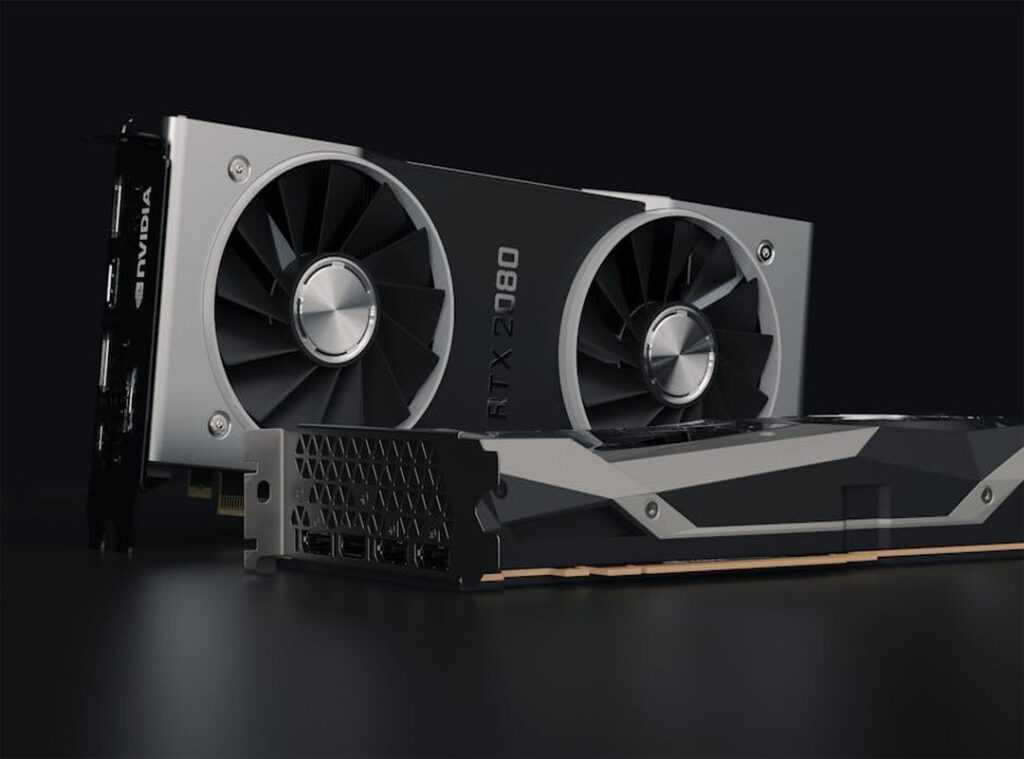
I blew $2,000 on a new GPU last year.
Then watched my CPU choke every new game like it was running on dial-up.
You know that sinking feeling when your shiny upgrade doesn’t fix the problem? Because the bottleneck wasn’t the part you replaced.
That’s why this isn’t another specs-and-benchmarks deep dive.
This is about timing. Real timing. Not theory.
Not “best practices” pulled from a forum post in 2016.
I’ve built or upgraded a gaming PC every single year for seven years.
Tracked frame drops across 40+ games. Watched price curves crash and spike. Waited for driver updates that actually mattered.
I know when waiting costs more than upgrading.
I know when a $300 CPU swap beats a $1,200 full rebuild.
And I know exactly what FPS drop in Cyberpunk or Starfield means you’re done waiting.
No fluff. No guesswork. Just thresholds that work right now.
If your system stutters where it used to fly (this) tells you whether to act today or wait six months.
When Should I Upgrade My Gaming Pc Jogameplayer isn’t a question with a one-size-fits-all answer. It’s a decision based on your hardware, your games, and your wallet.
This article gives you the real signal. Not the noise.
Your PC Is Whispering: Time to Listen
I ran Starfield at 1440p Ultra last week. Got 52 FPS. Then Alan Wake 2. 57 FPS.
Then Lords of the Fallen. 54 FPS. All three, back-to-back, same settings.
That’s not bad luck. That’s your hardware saying I’m done.
Sustained under 60 FPS in three new AAA titles isn’t a tweak-away problem. It’s a hard limit.
You’re seeing thermal throttling if your GPU hits 87°C and your CPU hits 91°C during a stress test. And your performance drops 12% between minute one and minute ten.
(Yes, I checked my own temps. Yes, it was embarrassing.)
OBS Studio crashes when you let NVENC? Texture mods stutter like a buffering YouTube video? Your overlays vanish mid-stream?
That’s VRAM exhaustion. Not “low memory.” Not “slow disk.” Your graphics card is out of room.
Here’s your five-minute check:
Open Task Manager → watch GPU memory under load. Fire up GPU-Z → check temps and clock stability. Run 3DMark Time Spy (free).
Compare your Graphics Score to a 4070 or 4080.
One frame drop in a cutscene? Not a sign. Wanting ray tracing on a 1080p 60Hz monitor?
Also not a sign.
But if you’re asking When Should I Upgrade My Gaming Pc Jogameplayer, then Jogameplayer has real upgrade paths. Not just hype.
Skip the “maybe next year” talk. Your build isn’t aging gracefully. It’s limping.
And you already know it.
When Game Cycles Pick Your Upgrade Date. Not You
Unreal Engine 5 hit hard in late 2023. Lumen and Nanite aren’t just fancy features (they’re) hardware gatekeepers.
I upgraded my rig in October 2023 thinking I was ahead of the curve. Turns out I bought into obsolescence before the first major UE5 title even launched.
Why? Because devs optimized for PS5 and Xbox Series X first (then) back-ported to PC. That meant early PC ports ran like garbage on hardware that should have handled them.
You saw it with Alan Wake 2. And Starfield. And every game that used Nanite geometry without a proper GPU driver patch.
So when should you upgrade? Not when you feel like it. When the games you actually care about force your hand.
GTA VI will run on Unreal Engine 5.2. Likely demanding at least an RTX 4070 or RX 7800 XT just to hit 60 FPS at 1440p.
I go into much more detail on this in How Often Should I Upgrade My Gpu Jogameplayer.
Fable reboot? Same engine. Same demands.
PS5 Pro drops Q3 2024. Xbox next-gen follows late 2025. PC optimization windows open 3 (5) months after each console launch.
That means mid-2024 is your last sane window for a solid GPU/CPU combo before bottlenecking becomes unavoidable.
Waiting for “next-gen” sounds smart (until) you realize the RTX 4070 Super beat the RTX 4090 in price-to-performance for 1440p gaming.
When Should I Upgrade My Gaming Pc Jogameplayer? Right before GTA VI’s confirmed late 2025 release (not) after.
Skip the hype. Watch the engine. Track the console dates.
When Waiting Costs More Than Upgrading

I stopped waiting for “perfect” upgrade timing in 2022.
That’s when my RTX 3080 started choking on Cyberpunk 2077 ray tracing. And the RTX 4080 dropped $300 in six months.
The inflection threshold isn’t magic. It’s math: ≥25% real-world gain and ≤15% more than your old part’s original MSRP (inflation-adjusted). If your GPU is older than three years?
You’re already past the first checkpoint.
Are you getting ≥20% lower FPS than recommended specs say you should? Then yes. It’s time.
Not “maybe.” Not “next year.”
DDR5-6000 CL30 kits hit $95 last spring. That made upgrading memory for a Ryzen 7000 build actually worth it. No new motherboard needed.
Just faster load times and tighter frame pacing.
You think holding onto a GTX 1070 saves money? It doesn’t. Not when you’re paying $15/month for cloud gaming.
That’s $180/year. A used RTX 3060 lands for $220. So you’re one year away from better performance and full local control.
I’ve watched people skip upgrades because they feared “buying too early.”
They ended up with worse experiences, longer waits, and higher total cost.
How Often Should I Upgrade My Gpu Jogameplayer answers that question. But only if you’re honest about what “good enough” really costs you.
When Should I Upgrade My Gaming Pc Jogameplayer? Ask yourself: Is your current setup making you angry? Or just tired?
If it’s anger. You already know the answer.
Platform Lock-In vs. Modular Upgrades: The $1,200 Trap
I blew $1,200 on a new AM5 motherboard and DDR5 RAM just to upgrade my CPU.
Then I realized my GPU was still fine. My storage was fine. My case was fine.
All because I thought “new socket = full platform refresh.”
It’s not.
AM4 to AM5 does force a full swap. DDR4 to DDR5 does mean new RAM and a new board. That part’s non-negotiable.
But PCIe 4.0 GPUs run on PCIe 3.0 motherboards. You lose maybe 2% in some games. Not worth scrapping your board over.
Intel’s LGA1700? Same socket for 12th, 13th, and 14th gen CPUs. I kept my B660 board for 38 months.
AMD’s breaks are tighter. Less breathing room.
Here’s my quick platform health score: multiply age (in years) by socket support status (1 = dead, 3 = active), then by RAM compatibility (1 = mismatched, 2 = DDR4 only, 3 = DDR5-ready). Score over 6? Time to look.
Ryzen 5 5600 + B550 + 32GB DDR4-3600 still crushes 1080p/1440p through 2025.
When Should I Upgrade My Gaming Pc Jogameplayer? Ask that question before you buy anything.
Check real-world benchmarks (not) marketing slides.
Jogameplayer Gaming System helped me skip two bad upgrades.
Stop Waiting. Start Timing.
I’ve been there. Wasting cash on parts I didn’t need. Skipping games because my rig choked.
Staring at forums, paralyzed by “should I wait?”
You’re not overthinking it. You’re just tired of losing time and money.
The three real triggers are simple:
- Your FPS actually dropped in the games you play
- A major engine or title shift is confirmed (not rumors)
Optimal timing isn’t about perfection. It’s about your schedule. Your budget cycle. Your next must-play game.
When Should I Upgrade My Gaming Pc Jogameplayer? You already know the answer. You just needed permission to trust it.
Run the 5-minute diagnostic checklist right now. Circle the earliest trigger date on your calendar.
Your best gaming year starts the moment you stop guessing (and) start timing.


